

Before construction on a project begins, environmental professionals are already at work identifying wetlands, streams, floodplains and other natural features that can impact how a property is planned and developed.
Wetland and stream delineation is a crucial step in responsible development, helping balance project goals with environmental stewardship and regulatory compliance. It often happens behind the scenes, but it plays a major role in shaping successful projects from the very beginning.
Goodwyn Mills Cawood Senior Biologist Ellen Strupp recently shared insights into this process during a Ladies in Land Nashville Chapter event, giving attendees a closer look at the expertise, fieldwork and problem-solving involved in delineation.
The importance of delineation
Before development can happen, environmental professionals identify and define natural features such as wetlands, streams and floodplains. This process – known as delineation – establishes the boundaries that guide where and how development can occur.
These boundaries are essential for ensuring compliance with environmental regulations, zoning laws and permitting requirements while also protecting natural resources. Proper delineation helps prevent encroachment into sensitive or restricted areas, reduces legal and financial risks and supports responsible land use planning.
Understanding the regulatory framework
Wetlands and streams are regulated through both federal and state frameworks. At the federal level, the U.S. Army Corps of Engineers oversees Waters of the United States (WOTUS) under the Clean Water Act. In Tennessee, the Water Quality Control Act gives the Tennessee Department of Environment and Conservation authority over Waters of the State, including streams, wetlands and groundwater.
Together, these frameworks help protect critical water resources, with each focusing on different environmental functions. Streams are primarily evaluated for water quality, flow, erosion control and aquatic habitat, while wetlands are assessed for pollutant filtration, flood storage, groundwater recharge and wildlife habitat protection.
As a result, these regulations can directly impact whether a site requires permits or other modifications before development can move forward.
What do environmental professionals look for on site?
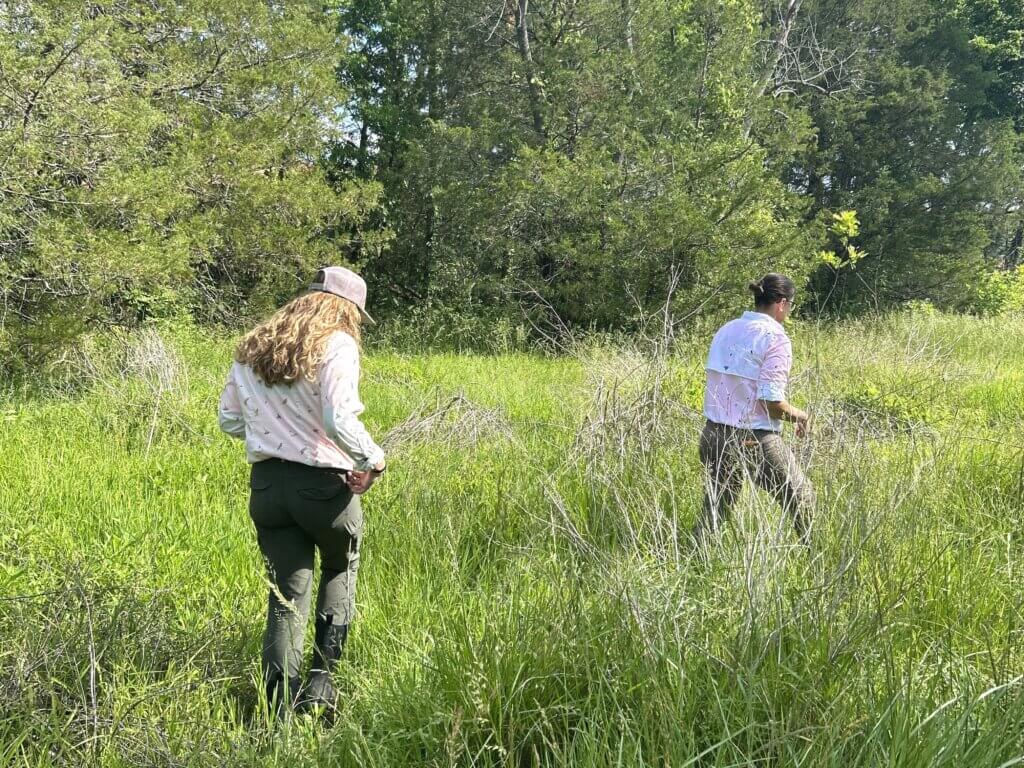
Delineation takes place primarily in the field, where environmental professionals use established tools, guidebooks and assessment criteria to evaluate site conditions.
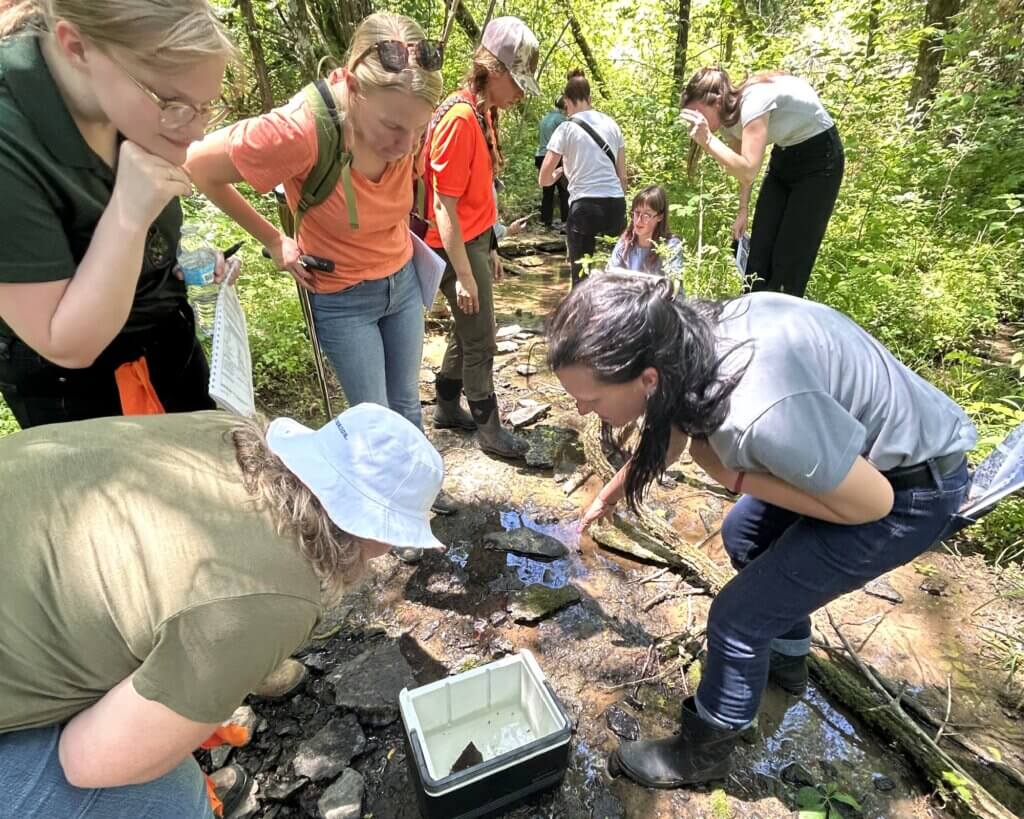
During site visits, they examine water features such as streams and wetlands, assess vegetation and soil characteristics, observe wildlife and habitats and review topography and drainage patterns. By analyzing vegetation, soils, hydrology and other environmental indicators, they can determine jurisdictional boundaries and identify important natural features that may affect permitting needs, regulatory considerations and potential environmental impacts.
How delineation supports development
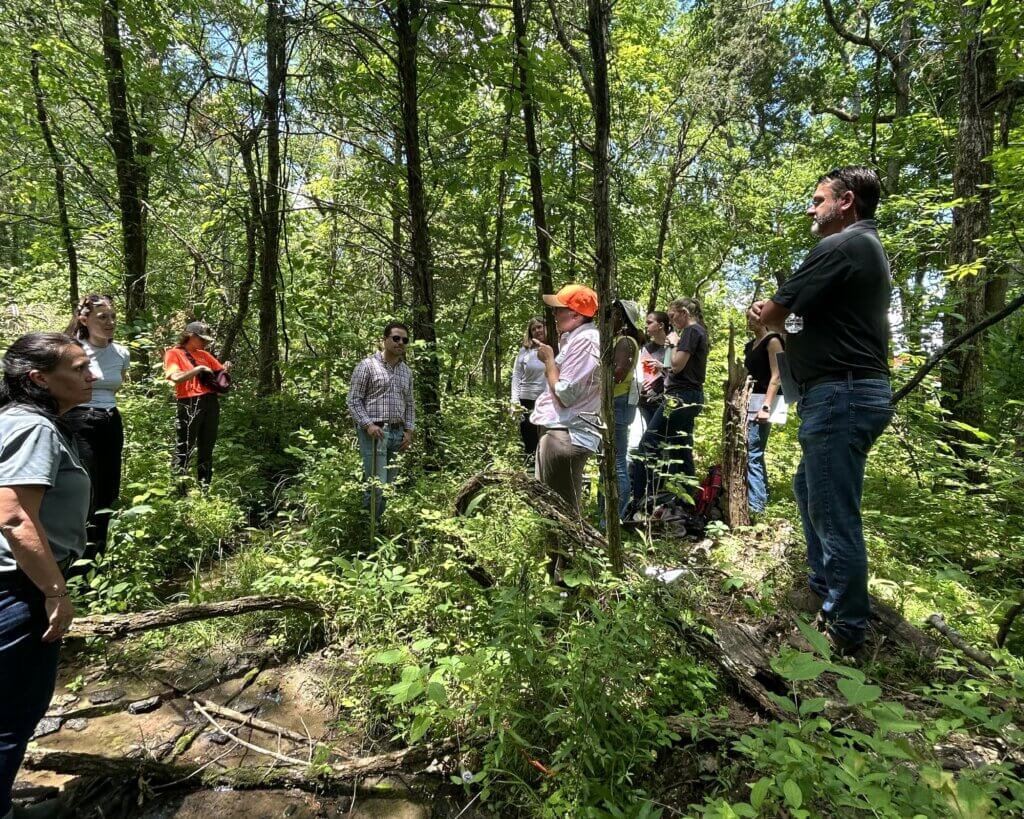
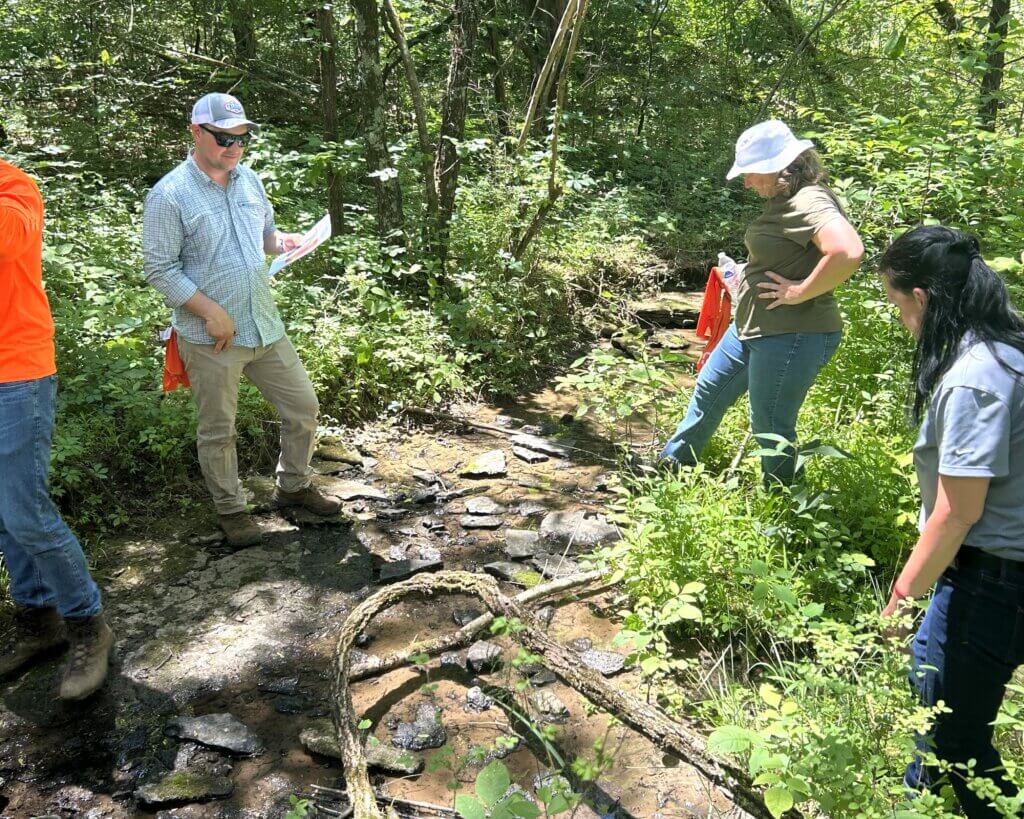
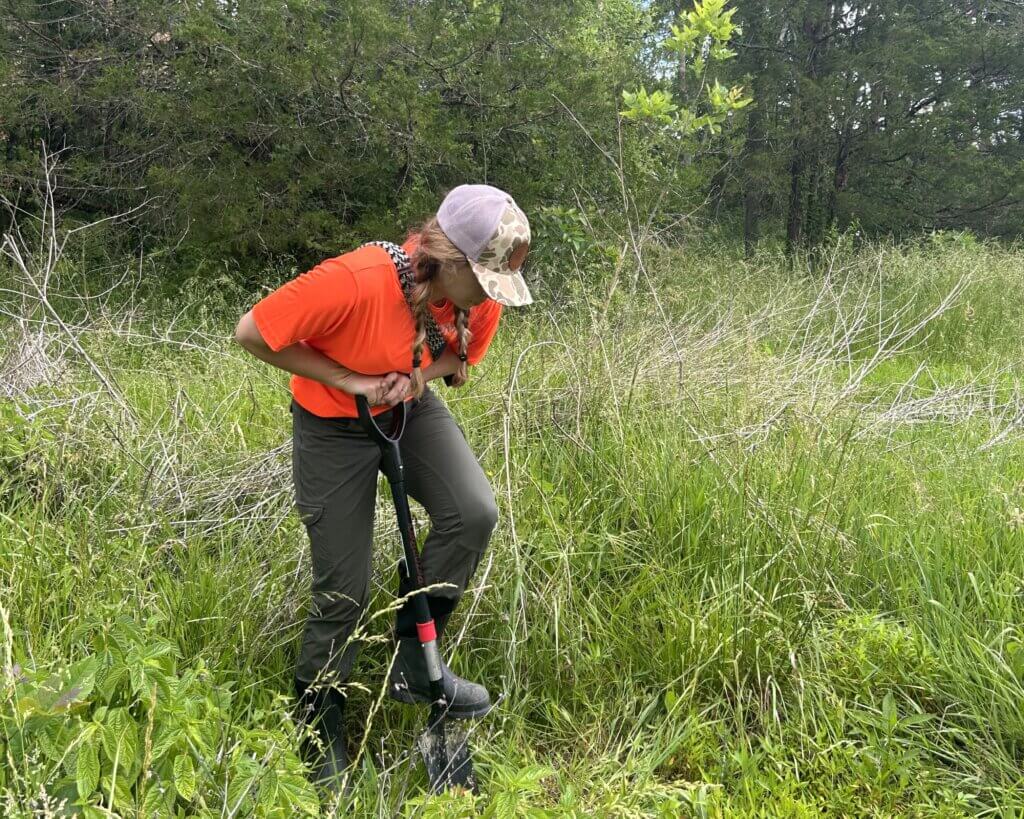
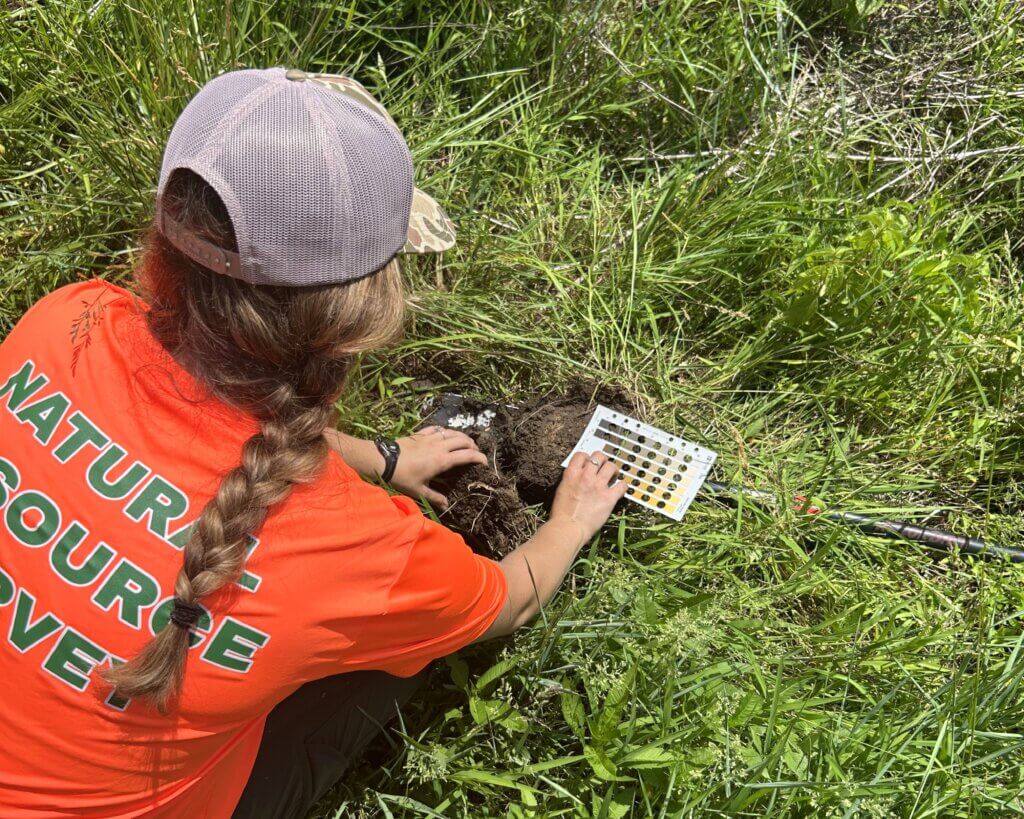
Following the presentation, attendees visited a development site where Ellen demonstrated the field work involved in wetland and stream delineation. From examining soil characteristics to identifying insects, the group was able to see firsthand how environmental professionals evaluate and document site conditions.
While wetland and stream delineation often takes place behind the scenes, it is one of the most important steps in shaping responsible and sustainable development. Throughout this process, environmental professionals help lay the foundation for strong, successful projects and support the long-term health of the communities they serve.