

By Hillary Morgan, AIA, NCARB and Clint Cassetty, AIA, NCARB
Historically, correctional facilities were cold, institutional and not places that promoted healing. Over time, this trend has shifted and today’s correctional healthcare spaces are being designed to foster recovery, transformation and independence.
For many incarcerated individuals, imprisonment represents the first opportunity to receive comprehensive and consistent healthcare. Many arrive with untreated chronic illnesses, substance-use disorders, severe dental needs or unmanaged mental health conditions. As prisons and jails have increasingly become mental health care providers over the last several decades, incorporating trauma-informed, holistic design into correctional healthcare has become essential.
The Facility Footprint
The design of these improved spaces all begins with the footprint. In modern facilities, there are smaller housing units or communities, each with its own attached care units and exam rooms. Inmates are separated into these smaller units by classification, which determines the security needed. Having healthcare in each housing unit allows for more personalized care and less unnecessary interaction with unfamiliar environments that may trigger the patient. It also reduces the risk of traveling throughout the facility to receive care.
These modern footprints oftentimes also include a larger main medical unit on the campus. Together, these facilities are prepared for everything from regular exams to emergency care situations and small procedures.
Not One-Size-Fits-All Security
This shift toward rehabilitative care has transformed the way healthcare environments within correctional facilities are designed and built. One of the first questions stakeholders must answer when thinking about their healthcare space is: “What level of security is needed?” There is not a one-size-fits-all solution; it is a dynamic spectrum.
Tailoring security levels to specific risk profiles, from minimum-security outpatient clinics to high-acuity behavioral health units, is important. The ultimate design objective is to create an environment that feels safe, calm and conducive to healing without appearing overly clinical or hostile.
Ultimately, modern correctional healthcare facilities are designed much like traditional healthcare environments, just within a secure framework. Licensed physicians, nurses, dentists, mental health clinicians and numerous other health professionals deliver care around the clock to ensure needs are met. Designers work to create a space where the inmate doesn’t necessarily feel like they are receiving care in a correctional environment.
Complexity of Care
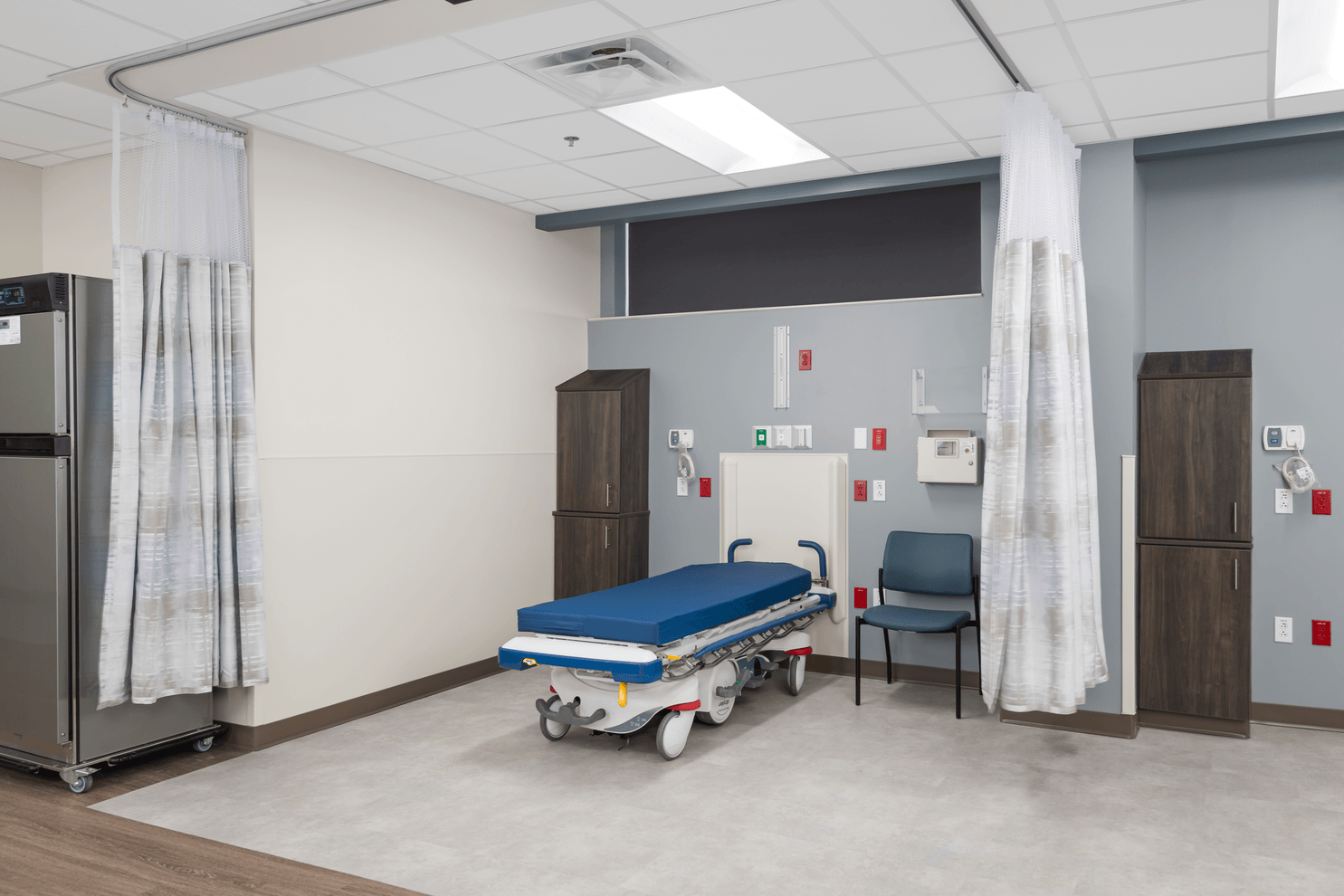
As the incarcerated population ages, facilities must adapt to manage increasingly complex medical conditions. Specialized services such as dialysis are now integrated into many correctional healthcare programs. For this type of specialized care, equipment is supplied by dedicated providers and operated according to the same national standards governing community healthcare facilities.
Moreover, throughout the last decade, correctional facilities have experienced a growing number of incarcerated individuals living with mental illnesses. Following the closure of psychiatric hospitals in the 1960s and the continued shortage of accessible mental health services, prisons and jails have increasingly become institutions caring for those with mental health conditions.
Because of this shift, designs are being changed to accommodate trauma-informed care, which considers a more complete picture of a patient’s life. High percentages of incarcerated individuals have extensive histories of physical, sexual or emotional trauma prior to incarceration. At the same time, they may have negative experiences with healthcare environments or professionals.
Adopting trauma-informed care principles ensures that routine correctional procedures like searches, security checks and healthcare visits do not inadvertently re-traumatize patients or trigger behavioral crises.
Balancing Safety with Humanity
Providing medical and behavioral healthcare within a correctional facility presents the unique challenge of balancing safety standards with a therapeutic environment. Due to the population and the environment, there is always an inherent amount of risk that comes along with offering healthcare inside prisons.
To design for better outcomes, architects work to calm patients and provide them with a more normal experience. When safety controls such as direct staff supervision and secure double-locked medical cabinets are integrated, designers gain greater flexibility to create therapeutic spaces that are human-centered.
Critical Design Decisions
Since most incarcerated individuals have significant histories of trauma, modern healthcare environments seek to do more than just look aesthetically pleasing. Healthcare spaces in correctional facilities are intentionally designed to deliver high-quality clinical care while actively promoting healing within a secure framework.
To help bridge the gap between security and well-being, biophilic designs are common in these spaces, meaning that many design choices revolve around including nature, daylight or other natural materials, which act to naturally soften the space.
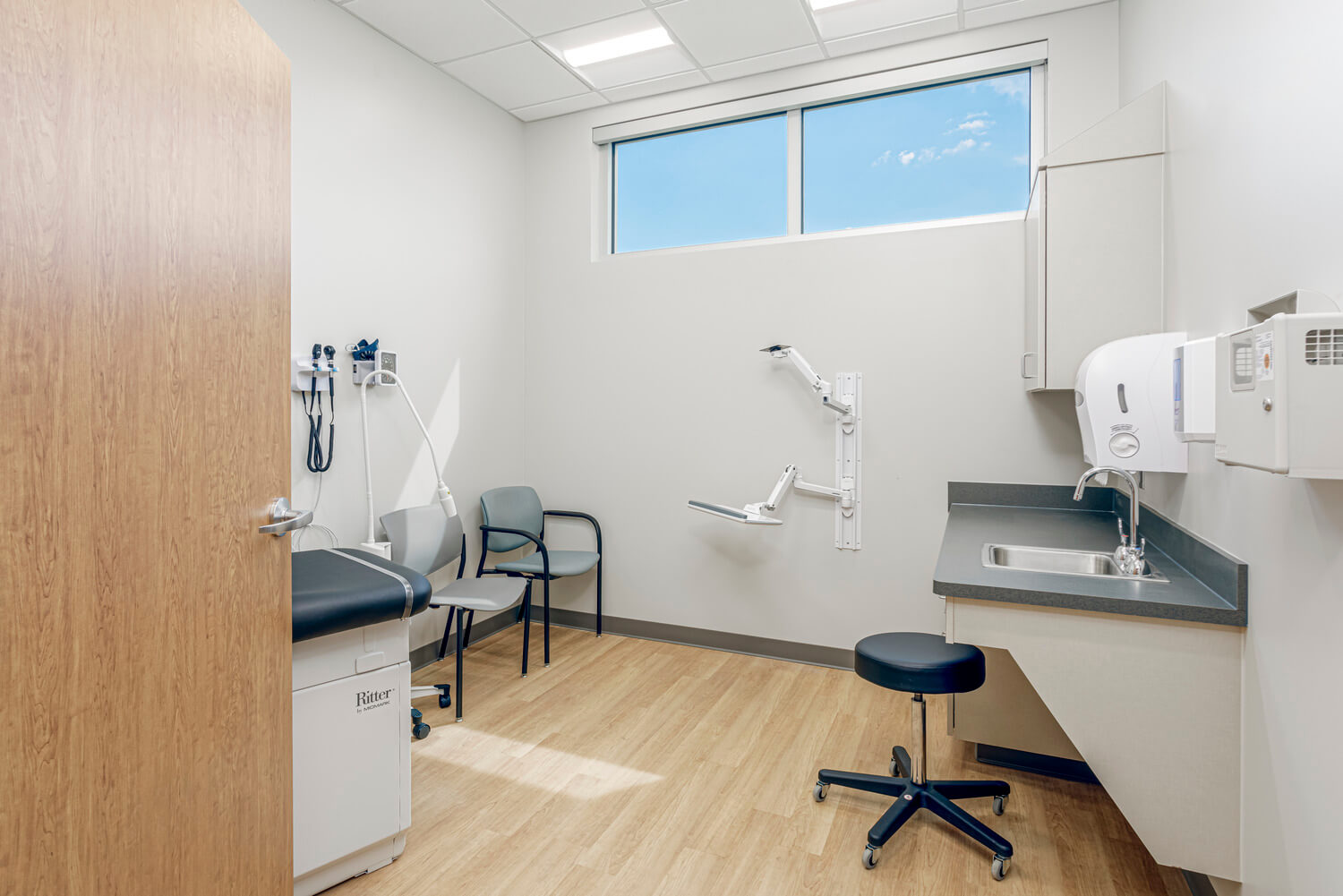
Incorporating natural daylight throughout the facility is proven to be beneficial. Having windows and being able to see outside, see the sun and see the weather are helpful in calming patients and regulating their circadian rhythm.
Calming lighting can be used in medical units as well. In design and application, this ensures that there are no sudden contrasts in lighting and that warm lighting is used instead of harsh blue fluorescent lighting.
For materials and finishes, natural and organic finishes are preferred to help soften the healthcare environment. Examples include solid-wood doors or durable materials that resemble natural materials but keep the areas secure.
Furniture selection includes choosing softened furniture with welcoming designs, which is helpful to make the patient more comfortable and make the environment more appealing and serene.
Color palettes can also change the feel of a space. Soft, neutral colors on the walls are proven to calm and create a softer environment.
Controlling acoustics is vital to managing anxiety. Loud and abrupt noises can trigger patients. It’s important, especially in this environment, to limit unnecessary sounds and use materials that absorb sound well.
Just as each of these design choices is integral to planning a medical unit at a correctional facility, they are equally essential in a hospital project of any scale. The principles of healthcare design remain fundamentally the same. Designing healthcare in correctional environments places an emphasis on safety and adds an additional layer of security.
Better Design Can Heal
While these individual design choices may seem minimal, their cumulative impact can be profound. This type of environment can promote self-worth, lower trauma and alleviate stress.
By treating health as an essential component of rehabilitation, modern correctional facilities support better behavioral outcomes for inmates and create safer conditions for staff. Good design and healthcare can influence individuals who wish to heal and help prepare them to successfully reenter society.